
Wrapping a drainage pipe in geotextile: French drain filter design done right
Why a French drain's perforated pipe gets wrapped in a nonwoven geotextile filter, and when you still need gravel.
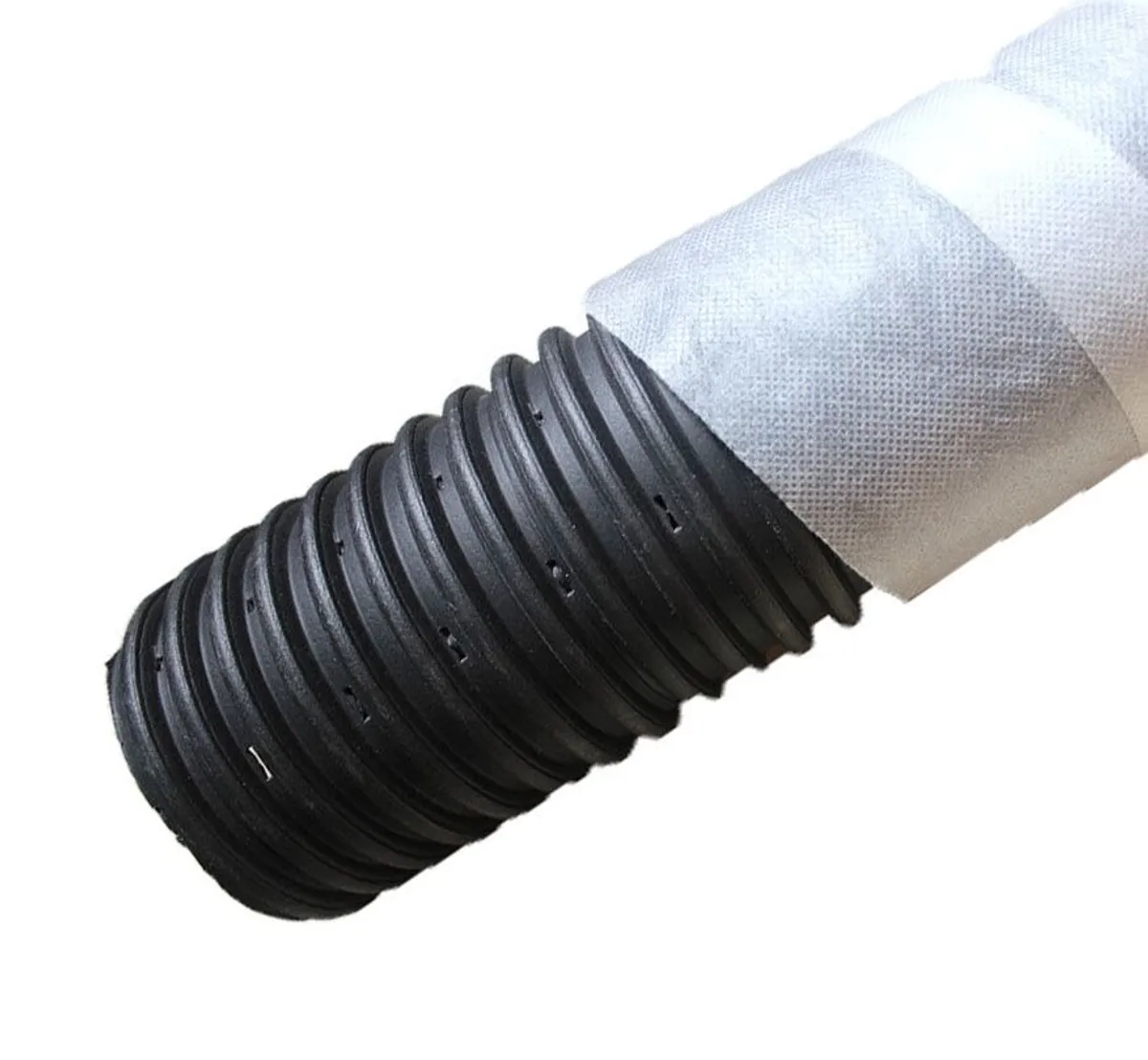
What the filter is actually for
A French drain is a perforated pipe in a trench that collects groundwater and carries it away. The pipe moves the water; the filter keeps the system alive. Wrap a perforated drainage pipe — or the surrounding stone — in a nonwoven geotextile and you let water in while holding back the fine soil that would otherwise wash into the pipe and silt it solid. Skip the filter and the drain works beautifully for a season or two, then the perforations clog with fines and you're digging it up. The filter isn't an upgrade; it's the part that decides whether the drain still drains in five years.
Why nonwoven, not woven
The filter fabric has to do two opposite things at once: pass water freely and stop soil migrating through it. That's the nonwoven geotextile job — its felted, open pore structure lets water through while the pore size traps fines. Woven geotextile is strong but its tight weave clogs and chokes flow, so it's the wrong fabric for a drain. Match the nonwoven's apparent opening size to the surrounding soil: too open and fines pass straight through, too tight and it blinds over. In a fine silt or clay, an over-tight fabric can clog as surely as no fabric at all — the filter has to suit the soil it sits in, not just be present.
Gravel, or a filter sock without it?
Two ways to build it. The classic: a perforated pipe bedded in clean washed gravel, the whole trench lined with nonwoven geotextile wrapped over the top like a burrito so soil can't enter the stone. The gravel is the water-storage and flow path; the fabric is the filter around it. The shortcut: a drainage pipe wrapped in geotextile from the factory — a geotextile filter sock (often called by the EZ-flow / sock-pipe trade names) — laid straight in the trench with little or no stone. The sock-pipe is faster and cleaner in tight access, and it's a genuine drain pipe without gravel for light duty. But it carries and stores less water than a gravel-bedded line, blinds faster in dirty fine soils, and has no stone to hold the trench open. For a high-flow agricultural or retaining-wall drain, bed it in gravel; for a garden or foundation perimeter in decent soil, the sock pipe is usually enough.
How to install a French drain
Dig the trench to a steady fall — at least about 1% (10 mm per metre) toward the outlet, checked with a level, not eyeballed; a flat or back-falling French drain ponds and stinks instead of draining. Line the trench with the nonwoven geotextile, leaving enough on each side to fold over the top. Lay a bedding of washed gravel, set the perforated pipe with the holes down (water enters from below, where the water table is, and the pipe fills from the bottom — holes-up drains only once the trench is already flooded), backfill with more clean stone, then fold the geotextile over and close the trench. Bring the outlet to daylight or a soakaway. For a rigid alternative on retaining-wall and structural land-drainage work, a rigid permeable drain pipe takes backfill load the flexible corrugated pipe can't.
What silts a drain up
Almost every failed French drain failed at the filter. The usual causes: no geotextile at all, so fines wash into the stone; a woven or wrong-AOS fabric that clogged; the wrap left open at a lap so soil entered through the gap; or perforations laid up where they don't catch the water table. Get the filter right and the fall right and a French drain runs for decades with no maintenance. Get either wrong and no amount of pipe quality saves it.
Pipe and filter from one source
Send the drain run, the soil type and the flow you need to carry, and we'll match the corrugated drainage pipe — or a rigid permeable pipe for load-bearing runs — with the right nonwoven geotextile filter, sized to your soil, in one consignment.
Free Geosynthetics Spec & Selection Guide
Material grades, thickness/GSM sizing and price ranges for your project — sent to your inbox.
Frequently asked questions
Why wrap a drainage pipe in geotextile?
The geotextile filters out fine soil so it can't wash into the pipe and silt it up, while still letting groundwater through. Without it the perforations clog with fines within a season or two and the drain stops draining.
Do I need gravel in a French drain, or can I use a sock pipe?
A geotextile filter sock (drainage pipe wrapped in geotextile) can be laid with little or no gravel for light duty in decent soil — garden and foundation perimeters. For high-flow agricultural or retaining-wall drains, bed a perforated pipe in clean gravel wrapped in nonwoven; the stone stores and carries far more water and resists blinding in fine soils.
Should the holes in a French drain pipe face up or down?
Down. Water enters from below where the water table is, and a holes-down pipe starts draining as soon as groundwater rises to the bedding. Holes-up only drains once the trench is already flooded.
What slope does a French drain need?
At least about 1% — roughly 10 mm of fall per metre — toward the outlet, checked with a level. A flat or back-falling drain ponds and goes anaerobic instead of carrying water away.
Why did my French drain stop working?
Almost always a filter problem: no geotextile, the wrong fabric, a gap left open at a lap, or perforations laid where they don't catch the water table. Fines wash into the stone or pipe and clog it. The fix is the right nonwoven filter matched to the soil, plus a steady fall to the outlet.
Related product
View Corrugated Drainage PipeNeed a quote or a spec check?
Tell us your application and quantity — our English-speaking team replies within one business day.