
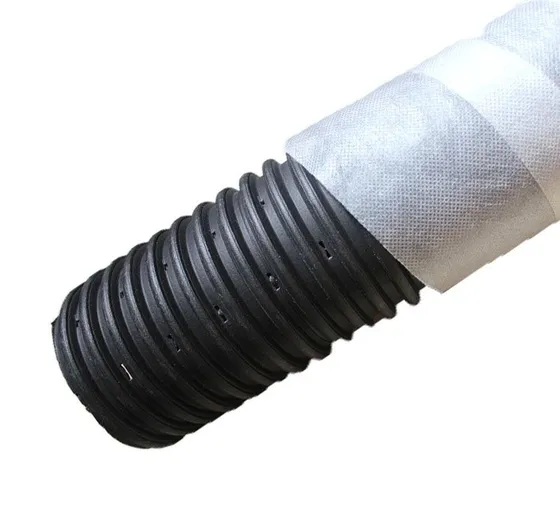
 Drainage
 Corrugated Drainage Pipe
HDPE double-wall corrugated drainage pipe (Type S) to AASHTO M294 — corrugated outside, smooth inside, solid or perforated, 4"–60" for culverts.
- AASHTO M294
- Type S dual-wall
- 4"–60" · solid / perforated
SIGMA rainwater storage module is a high-strength polypropylene cell that snaps together with others to build an underground rainwater storage and stormwater detention tank of almost any shape. As a modular rainwater tank cell it forms a high-void-ratio reservoir that captures urban runoff for detention, infiltration or harvesting and reuse — irrigation, road and car washing — then releases the surplus to the drainage network. The split design lets the stormwater storage crate be assembled on site and backfilled the same day, and the PP is durable, recyclable and resistant to high and low temperatures.
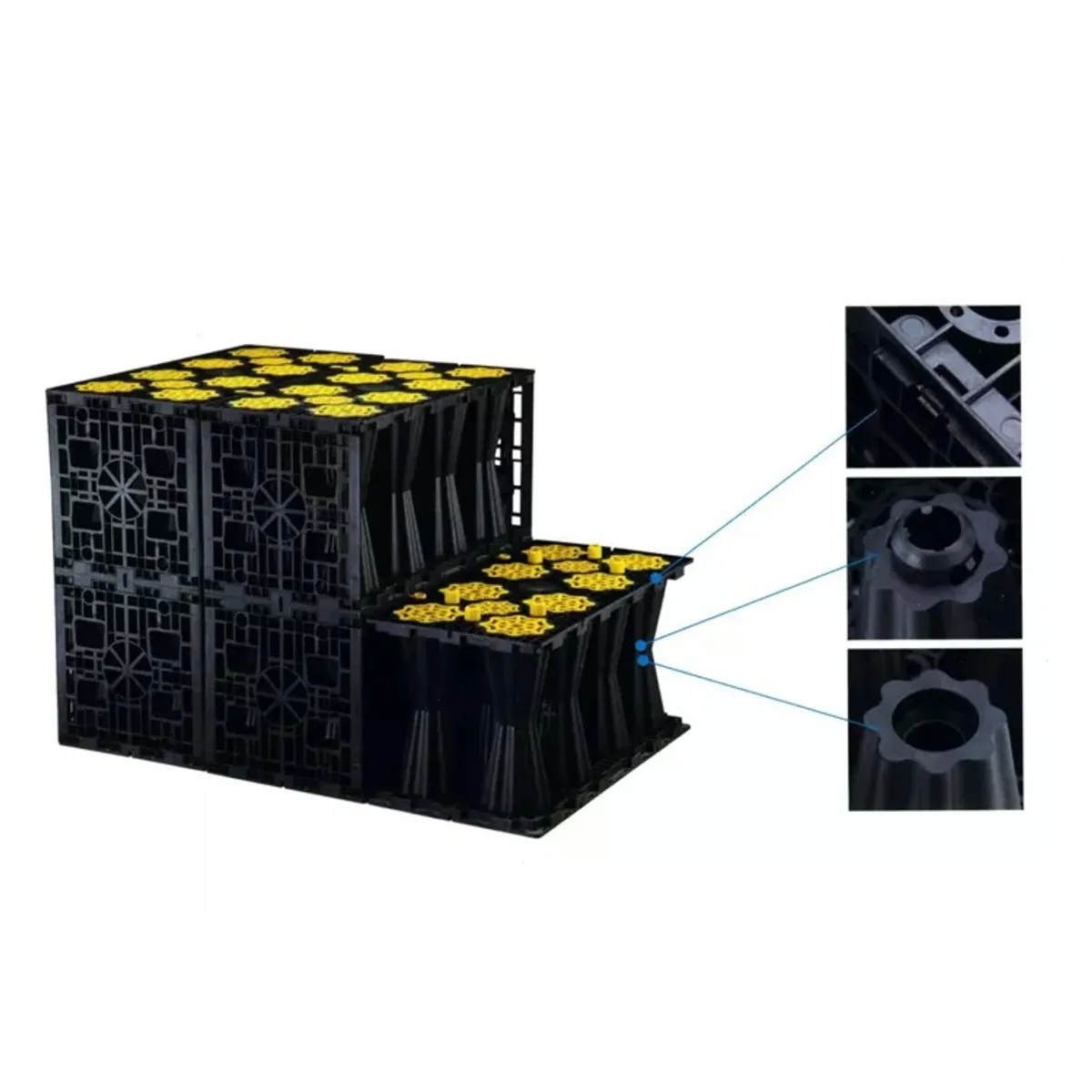
A rainwater storage module is a high-strength polypropylene cell that clips together with others to form an underground tank. Because the pool is assembled from modules, the shape can be combined freely to fit the site without being restricted by the available ground, and a modular rainwater tank cell system stores far more water per cubic metre than a solid tank thanks to its high void ratio. Wrapped in geotextile it works as an infiltration soakaway; wrapped in an impermeable liner it becomes a sealed rainwater storage and detention tank for harvesting and reuse.
The cells are moulded from polypropylene, chosen because it is durable and resistant to both high and low temperatures, so the buried tank stands up to harsh ground conditions over a long service life. The PP is a primary recycled material with additives, making the module environmentally friendly and fully recyclable; buried deep underground it does not damage the surrounding ecosystem and is easy to maintain. The cell structure itself gives the crate its superior pressure-bearing capacity in both the vertical and lateral directions.
As a stormwater storage crate the module captures urban runoff so it does not overwhelm the drainage network: water is detained and released slowly, infiltrated into the ground, or harvested for irrigation, road washing and car washing before the surplus flows on. This rainwater collection approach is the one set out in the national Technical Guidelines for Sponge City Construction — instead of running straight off into the channel, rainwater is filtered into a collection tank, drawn down for reuse, and only the overflow is released. The PP cells carry strong vertical and lateral loads, so the completed tank can sit under greenery, plazas, footways, carriageways, parking lots and even fire lanes.
The split design lets the modules be detached and stacked flat for delivery, then assembled by hand on site with no heavy machinery. Once the modules are spliced into the planned pool shape and wrapped, the tank can be backfilled the same day the trench is excavated, so the construction period is short and disruption is kept low. The inlet and outlet are connected to the surrounding drainage, with a primary filter ahead of the tank to keep grit out of the cells.
The tank suits underground stormwater detention and attenuation, rainwater harvesting and storage for reuse, infiltration or soakaway systems, and sponge-city urban runoff control. Because the cells are load-bearing, the finished tank can be built under greenery, plazas, parking lots, carriageways and fire lanes, putting the storage out of sight while the surface stays usable.
The split, flat-pack design saves valuable shipping space, and once installed the modules cut time, transport and post-maintenance costs compared with traditional stainless-steel and concrete pools. Because there is no single public standard for these crates, SIGMA module dimensions, void ratio and vertical/lateral load ratings are confirmed against production data — never guessed. For the liner that seals a detention tank see our drainage range, wrap an infiltration tank with our nonwoven geotextile, and pair the inlet/outlet with our corrugated drainage pipe.
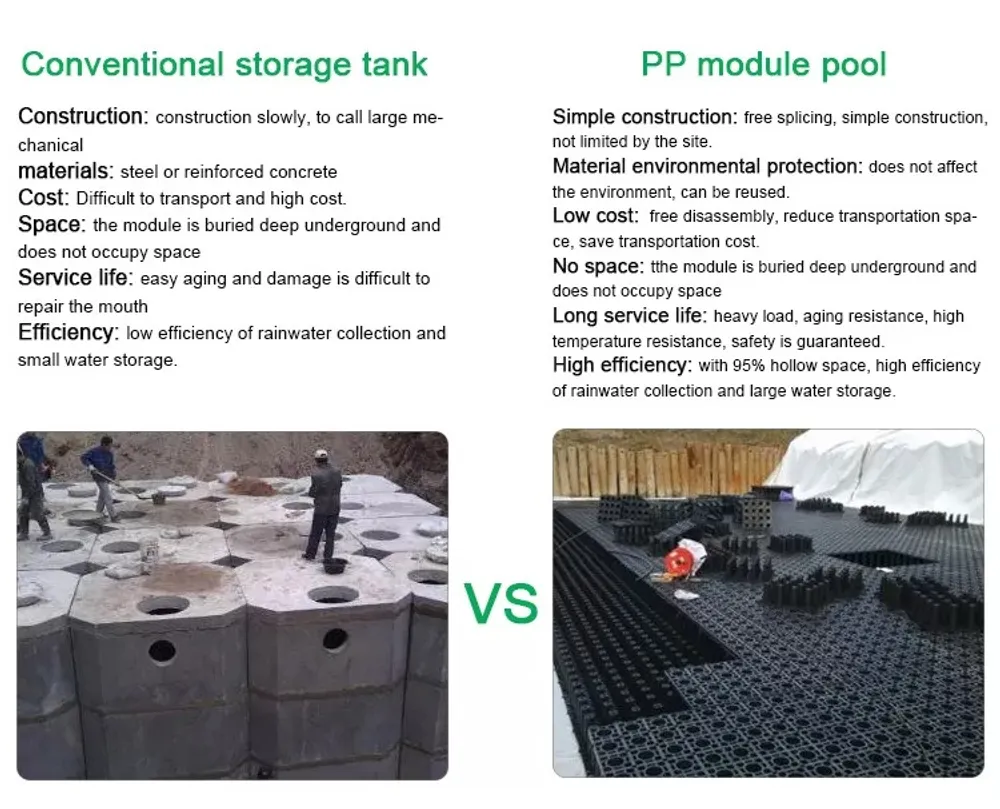
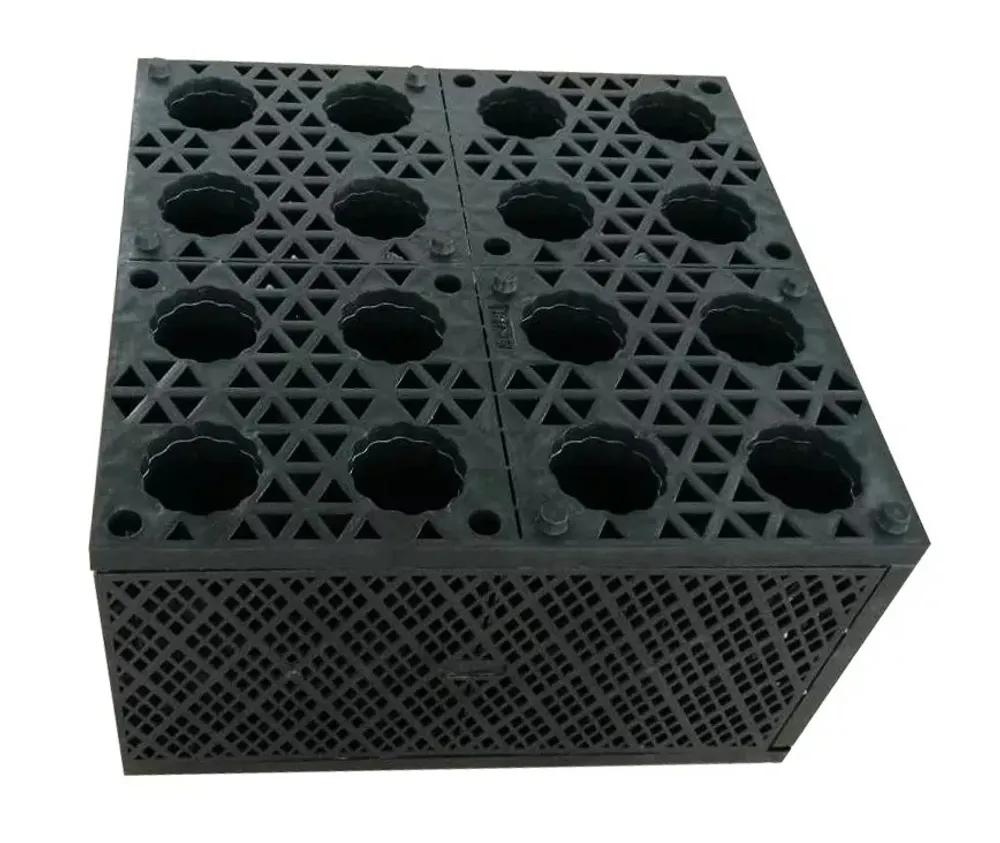
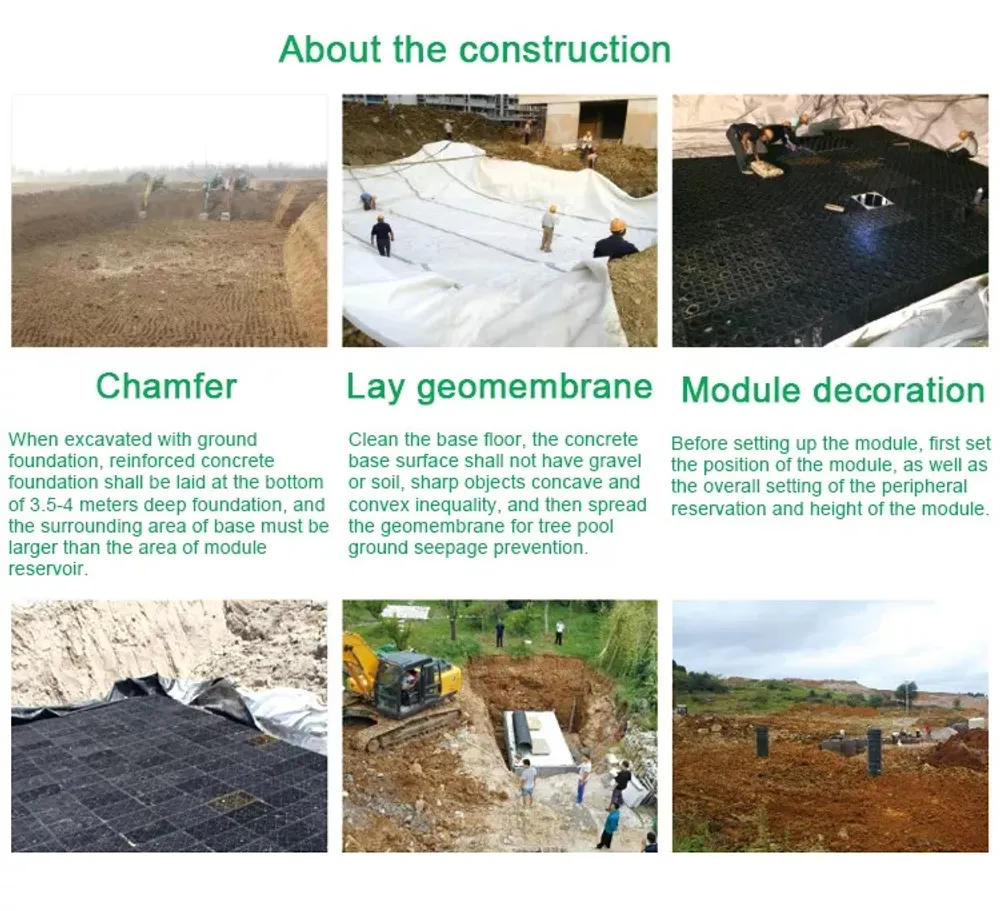
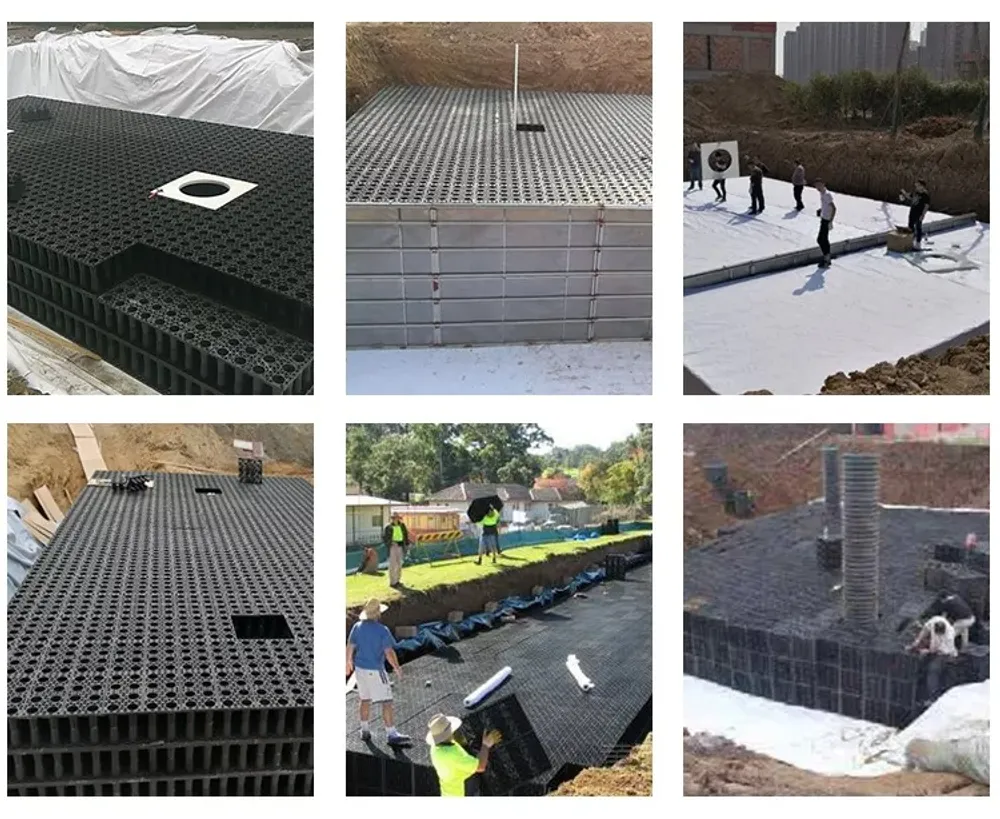
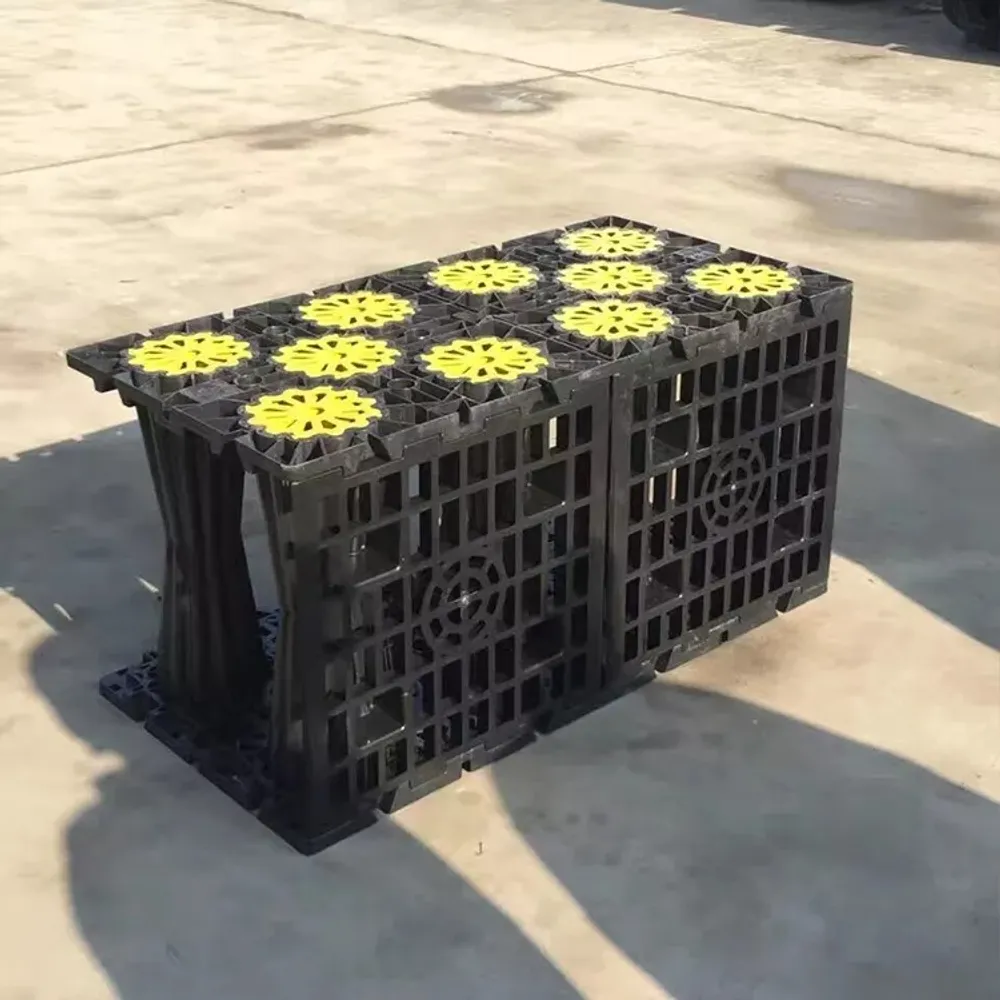
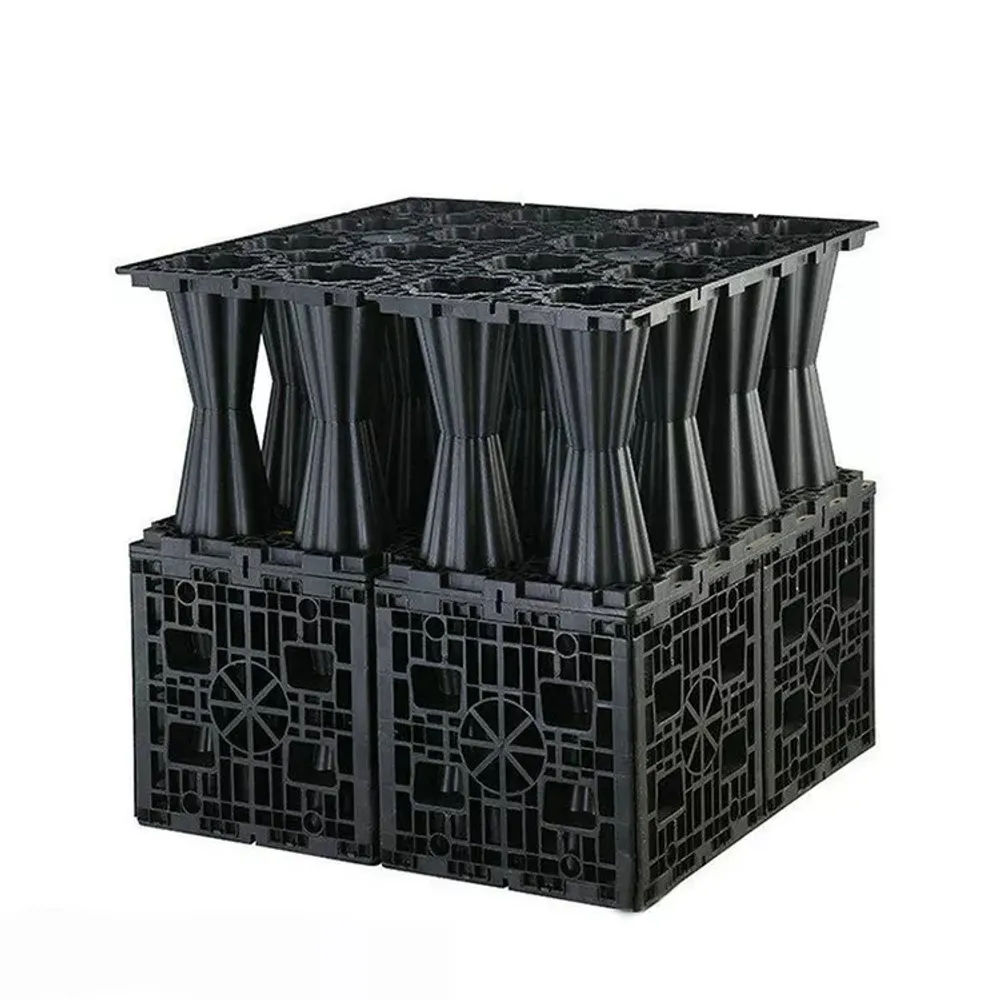
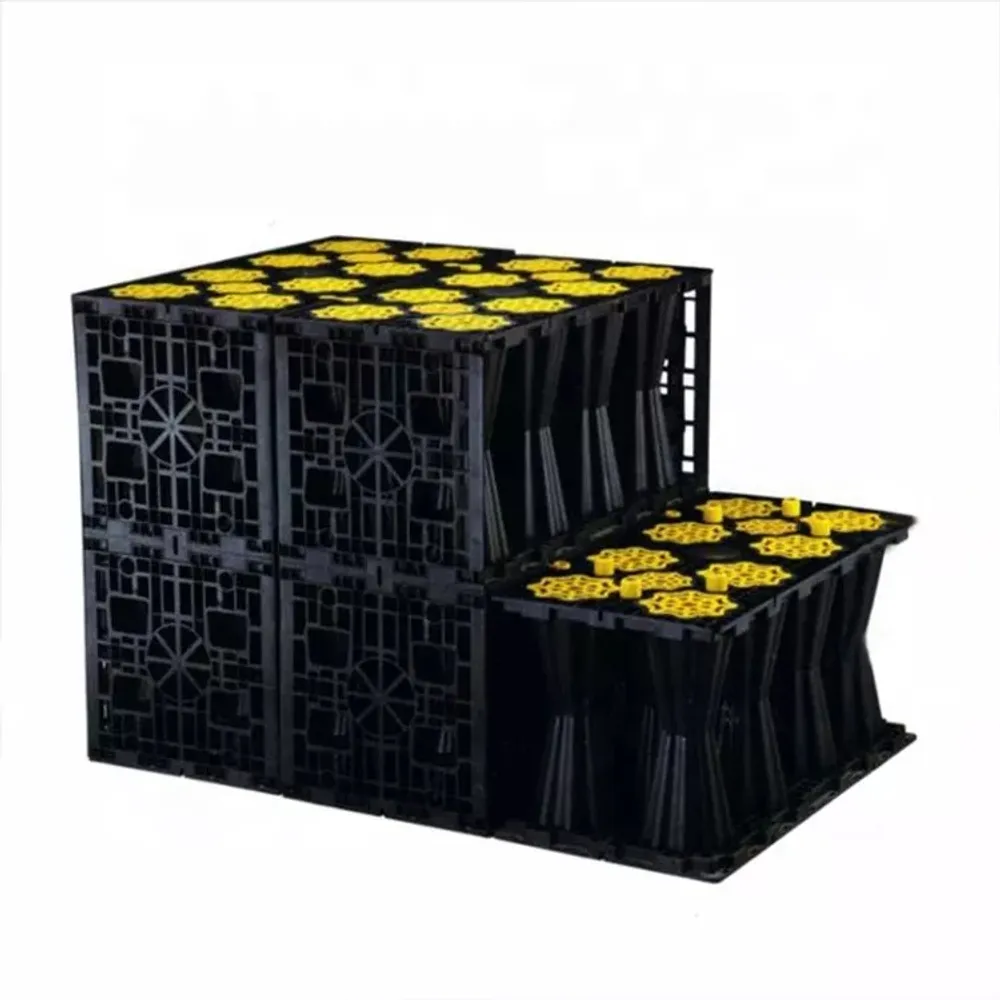
Rainwater storage module (PP stormwater crate) — manufacturer specification. No single public statutory standard governs these modules; numeric values to be supplied from SIGMA production data.
| Property | Value | Notes |
|---|---|---|
| Material | Polypropylene (PP), recyclable | — |
| Form | Modular cell / crate — splices into a tank of any shape | — |
| Wrap | Geotextile (infiltration) or geomembrane (sealed detention) | project-specific |
| Color | Black; other colors on request | — |
| Module dimensions (L × W × H) | 500×500×500 / 540×540×520 / 1000×500×500 / 1200×600×600 mm | stackable; splice to any tank shape |
| Void ratio / storage efficiency | ≥95% | typically high for PP crates |
| Vertical compressive load | ≈400 – 600 kN/m² (heavy-duty grades ~800 kN/m²) | test method & deflection vary by grade — quoted per order |
| Lateral (side) load | On request | quote test method |
| Module weight | On request | — |
| Max. burial / cover depth | On request | depends on load rating |
It is a polypropylene crate that snaps together with others to build an underground stormwater tank. Depending on how it is wrapped, the tank detains and slowly releases stormwater, infiltrates it into the ground as a soakaway, or harvests rainwater for reuse such as irrigation and washing. It is a core component of sponge-city stormwater control.
The module assembly is wrapped to suit the duty: an impermeable geomembrane liner makes a sealed detention or harvesting tank, while a permeable geotextile wrap makes an infiltration / soakaway system that lets water seep into the surrounding ground. Tell us the duty and we will specify the wrap.
The PP modules carry strong vertical and lateral loads, so a correctly designed tank can sit under greenery, plazas, footways, carriageways, parking lots and fire lanes. Because load ratings vary by model, we confirm the vertical and lateral capacity and the allowable cover depth from SIGMA datasheet for your traffic loading.
The split, modular design ships flat to save space, assembles on site without heavy machinery, and can be backfilled the same day it is excavated — a short construction period at lower transport and maintenance cost than stainless-steel or concrete pools. The pool shape can also be combined freely to fit the available ground.
Price depends on the module size and load grade, the total tank volume, whether a geotextile or geomembrane wrap is included, and the order quantity. Because the system is sized to your site rather than to a single public standard, send us the storage volume you need, the duty (detention, infiltration or harvesting) and the traffic loading above the tank, and we will quote per module and per cubic metre of storage.
The modules are produced to order in PP, so a minimum order quantity applies. Because the tank is built from many cells, even a small tank usually meets the MOQ — tell us the tank volume and we will confirm the module count, the MOQ and the lead time.
Lead time depends on the module load grade and the number of cells in your tank, plus any wrap supplied with the order. Once we confirm the module dimensions and load rating against SIGMA production data, we will give you a firm production and shipping schedule.
The split design lets the cells be detached and overlapped so they stack flat and ship compactly, saving valuable container space. We confirm the packed module dimensions and weight from SIGMA production data, then advise how many modules fit a container for your tank so you can plan freight — send us the volume and destination port.
Tell us quantity, destination port, and any questions — we reply within one business day.
Drainage HDPE double-wall corrugated drainage pipe (Type S) to AASHTO M294 — corrugated outside, smooth inside, solid or perforated, 4"–60" for culverts.
 Drainage
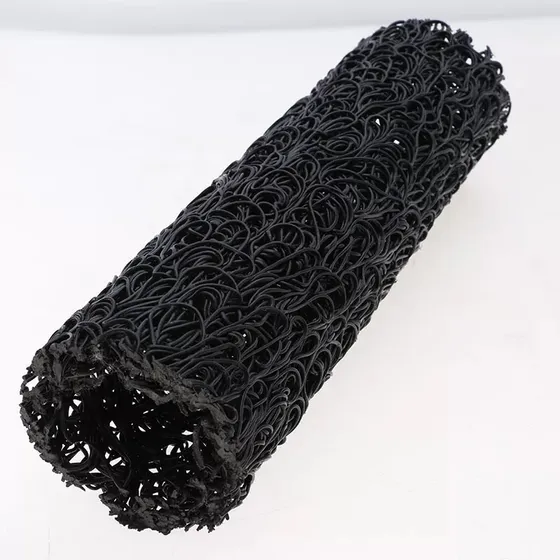
 Rigid permeable drain pipe (plastic blind ditch) — a PE filament-wound permeable core, optionally geotextile-wrapped, for rapid groundwater intake.
 Drainage
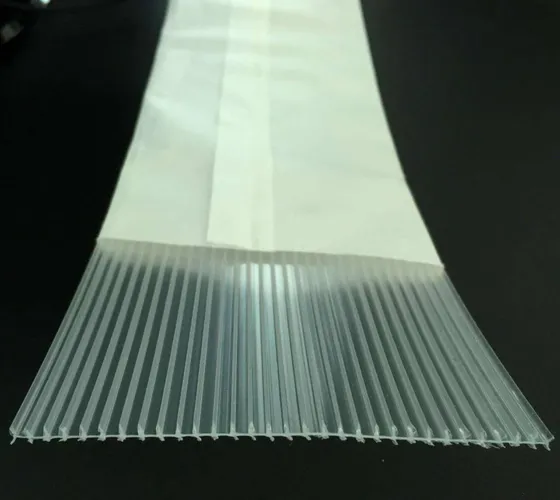
 Prefabricated vertical drain (PVD / wick drain) — a PP drainage core in a nonwoven PP geotextile filter that accelerates consolidation of soft soils.