
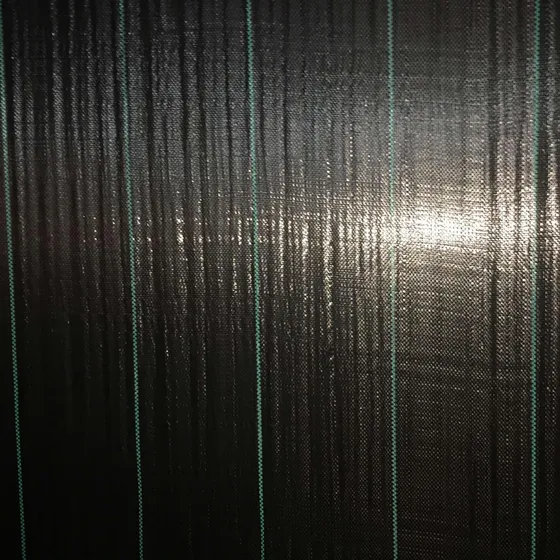
 Geotextile
 Woven Geotextile
High-strength woven geotextile fabric (PP / PET high-tenacity yarn) to AASHTO M288 — for separation, stabilization and reinforcement on roads.
- AASHTO M288
- Class 1 / 2 / 3
- PP / PET · Woven
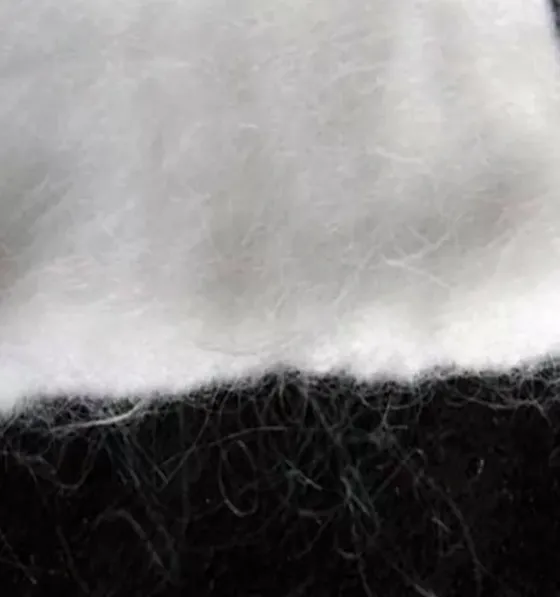
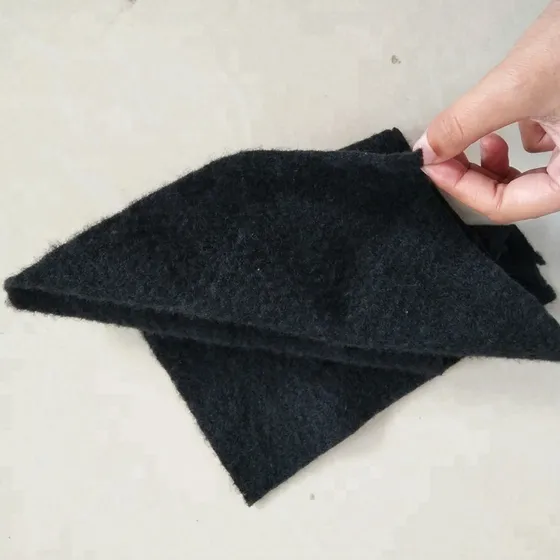
SIGMA PET needle-punched geotextile is a staple-fiber polyester (PET) nonwoven geotextile built to AASHTO M288. Polyester staple fiber is opened, carded, web-laid and needle-punched into a felt-like fabric for filtration, separation, drainage and protection. This pet nonwoven geotextile is anti-aging and UV-resistant, withstands soil chemicals, fuels and rot, and has high elongation so it conforms to uneven and irregular bases. Graded by installation survivability (Class 1–3), it is used for railway subgrade reinforcement, highway pavement maintenance, dyke protection, French drains and as a cushion over geomembrane liners — shipped direct from our factory.
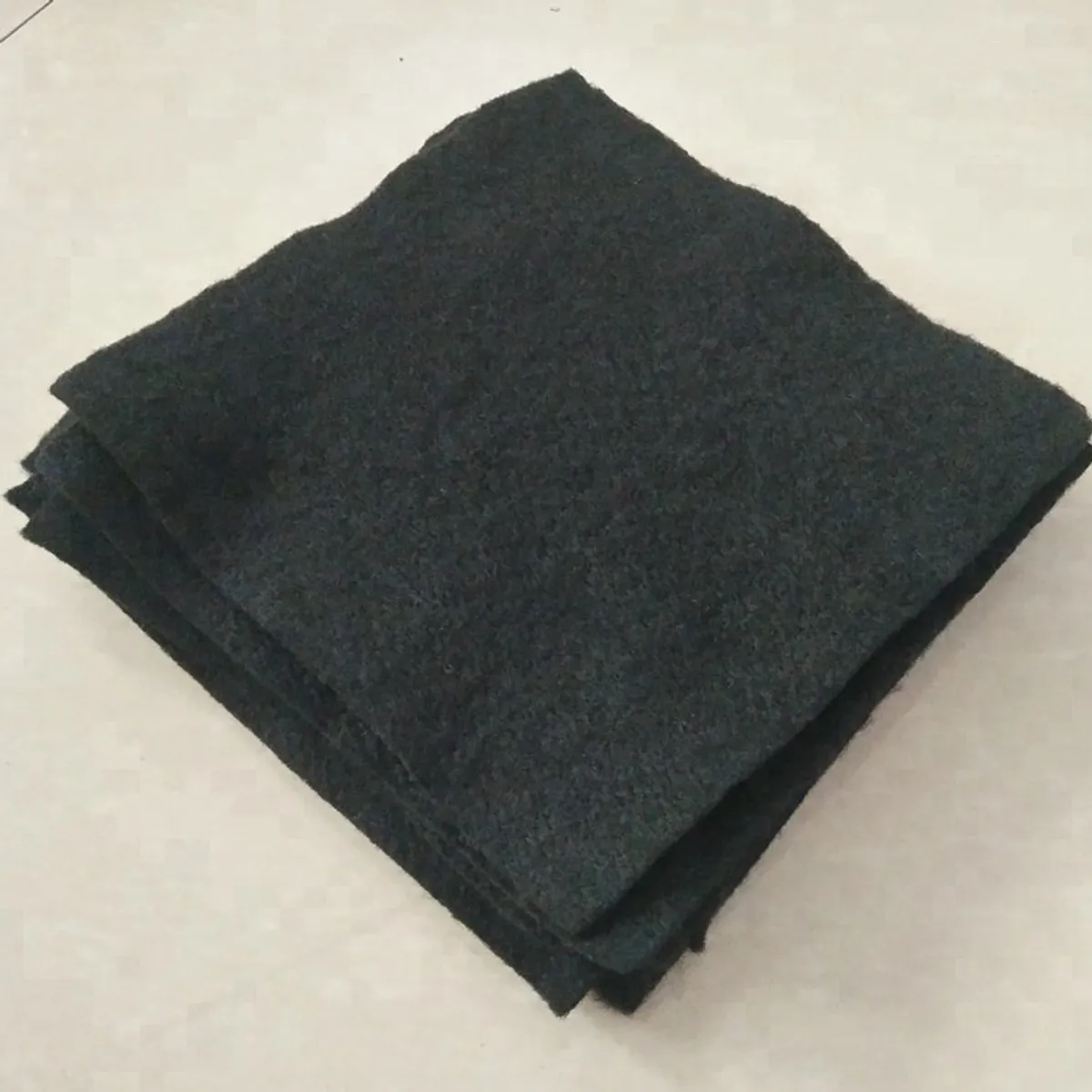
SIGMA PET needle-punched geotextile is made from polyester staple fiber that is opened, carded, web-laid and needle-punched into a thick, felt-like sheet. This pet nonwoven geotextile is built to the AASHTO M288 standard and graded by installation survivability — Class 1 (most severe), Class 2 (default) and Class 3. It is anti-aging with very high resistance to ultraviolet radiation, so it is not easily degraded, and it resists soil chemicals, gasoline and diesel as well as rot.
The fabric follows the staple-fiber nonwoven route: polyester short fiber is opened, carded so the fibers intertwine, laid into a normalised and fixed web, and then bonded by needle-punching, where barbed needles draw fibers vertically through the web to lock the layers together. Because the bond is purely mechanical, the polyester needle punched geotextile has a uniform three-dimensional pore network and high elongation, and the PET polymer adds thermal stability — the fabric withstands temperatures up to about 230 °C while maintaining its structure and original physical properties.
The needle-punched structure gives this polyester needle punched geotextile high flat (in-plane) drainage and vertical permeability, so it filters water while holding back soil fines — ideal as the wrap around a French drain, in subsurface drainage blankets, and as a cushion / protection layer over and under geomembrane liners. With high elongation under stress it conforms to uneven and irregular bases without tearing, which suits railway subgrade reinforcement, highway pavement maintenance, dyke protection, hydraulic-structure isolation, tunnels, sports halls and coastal beach, reclamation and environmental-protection projects.
A polyester (PET) needle-punched fabric offers high creep resistance and excellent chemical and thermal stability, which is why PET is often preferred for demanding reinforcement, long-term load and warmer or chemically active environments. A polypropylene grade is lighter and usually lower cost and is well suited to general filtration and separation — compare it on our PP geotextile page, or see the full staple-fiber nonwoven geotextile range. For high-tensile reinforcement a woven fabric is the better choice; see our polyester-PP woven geotextile.
A pet nonwoven geotextile is unrolled over the prepared subgrade and overlapped at the joints — typically 300 mm on firm ground and 0.6–1 m or sewn seams on soft, wet soil — so the fabric stays continuous when backfill is placed. Material should be end-tipped onto the geotextile and spread without trafficking the bare fabric, and exposed edges covered promptly, since prolonged UV exposure reduces strength even though the polyester is UV-stabilised. As a wrap for a French drain the fabric is laid in the trench, the pipe and aggregate placed, and the fabric folded over the top with a generous overlap.
AASHTO M288 sets filtration permittivity and apparent opening size (AOS) from the in-situ soil gradation and grades strength by survivability Class (1, 2 or 3) rather than by weight: Class 2 is the default, Class 1 for severe placement over coarse stone or soft subgrade, Class 3 for mild conditions. As the manufacturer we control the fiber and the needle-punch line, so each roll of PET needle-punched nonwoven geotextile is produced to a consistent gsm and tested to the M288 minimums. Tell us the soil, function and site severity and we will size the fabric and quote the same business day.
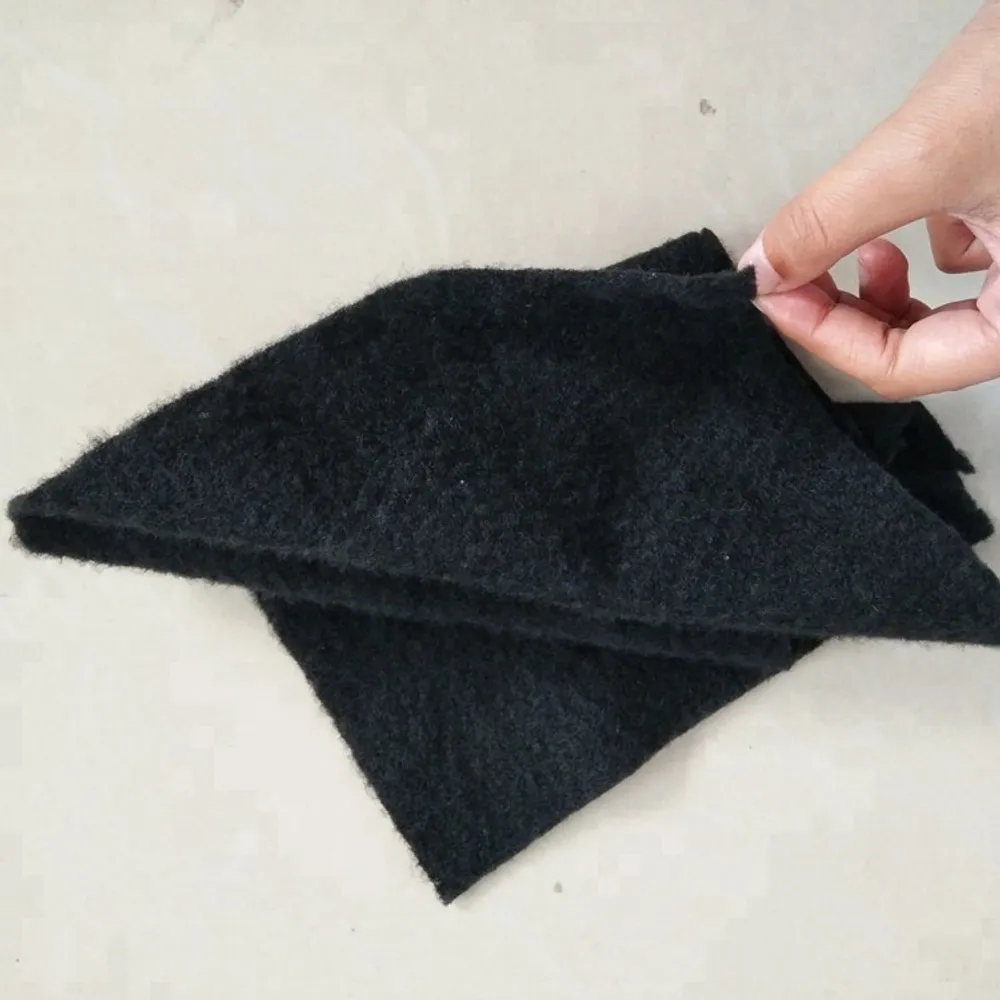
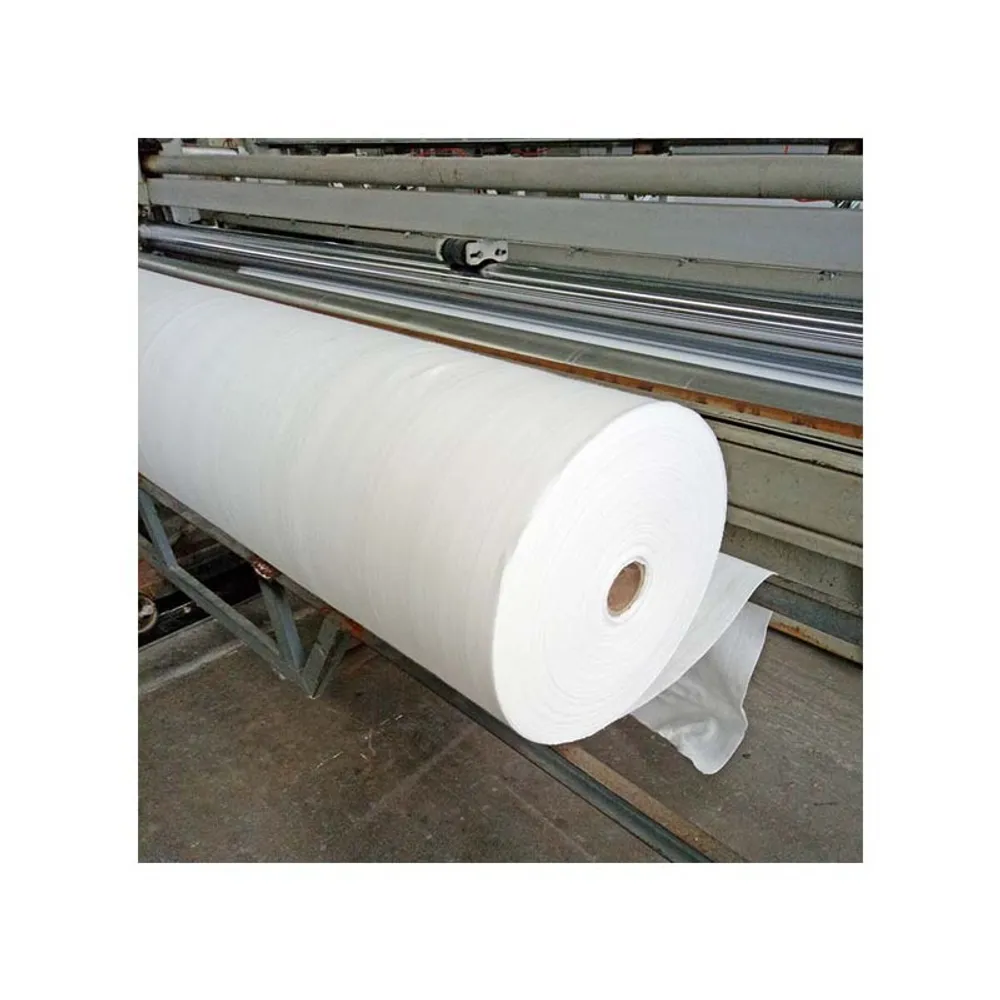
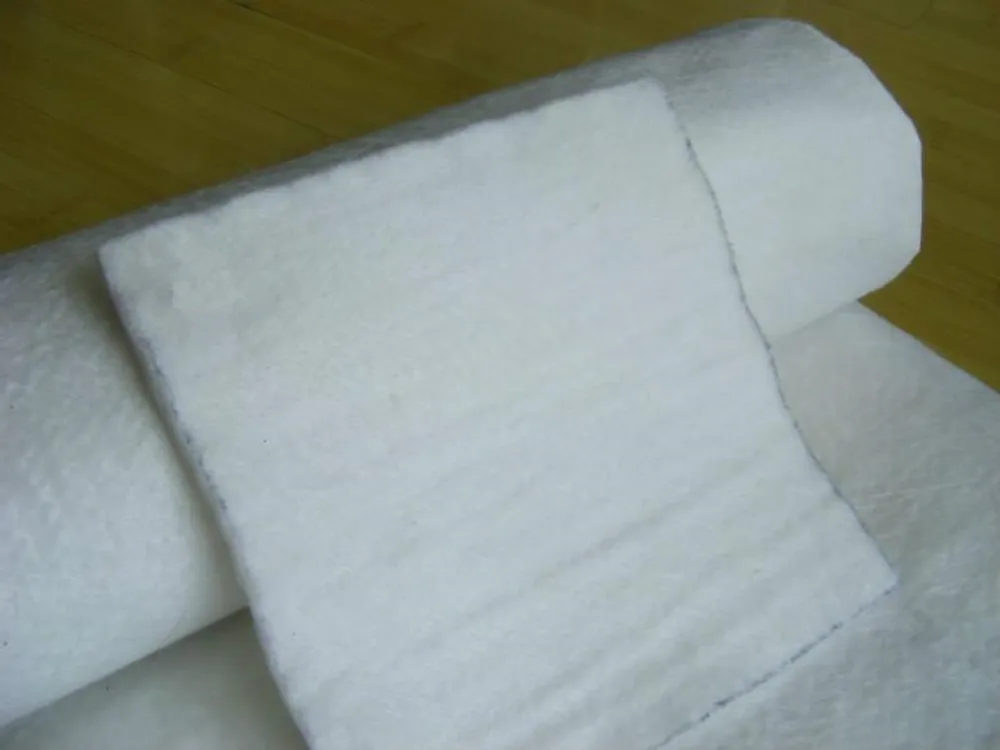
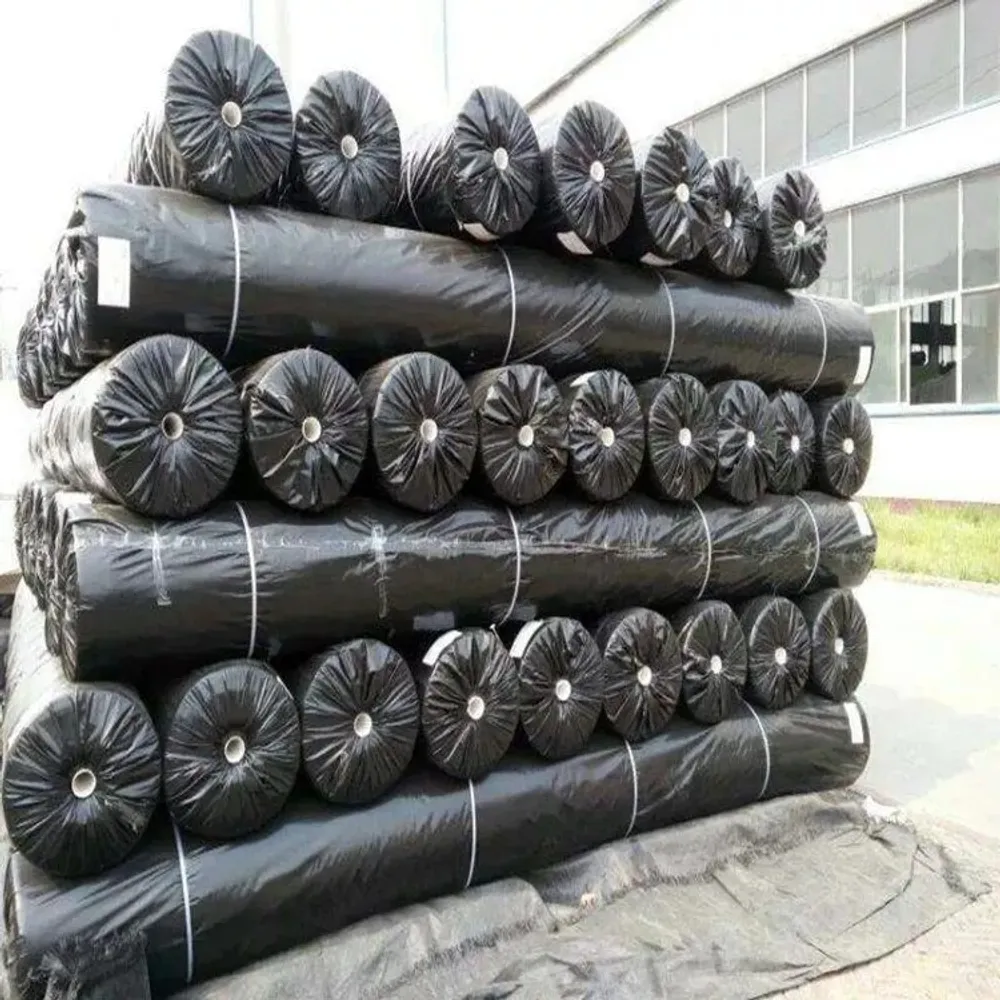
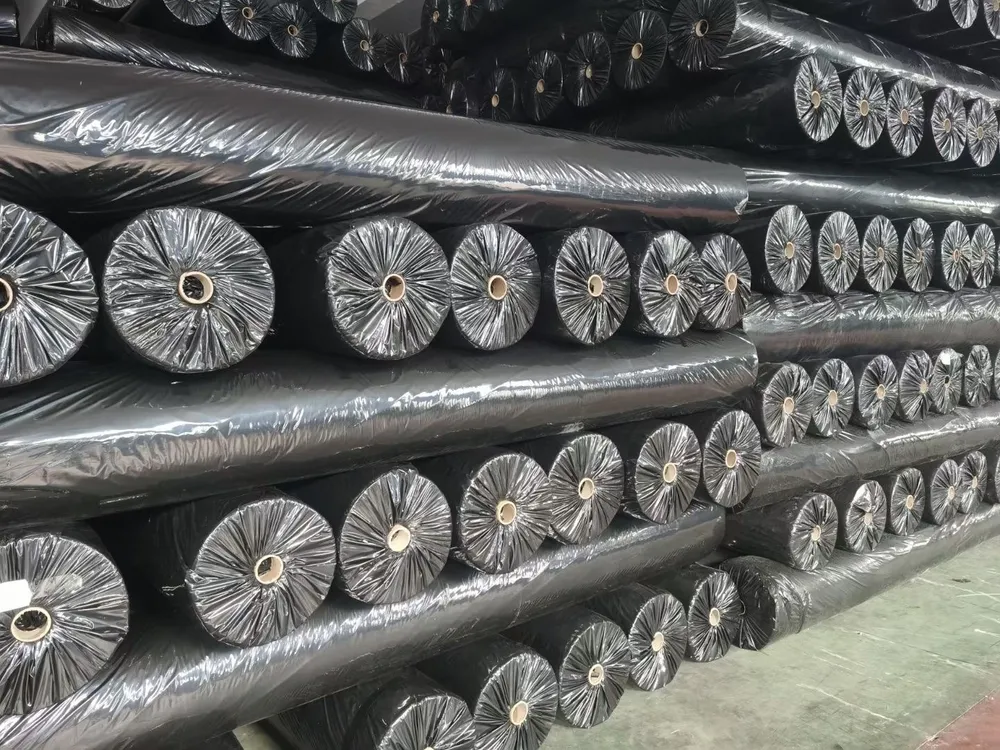
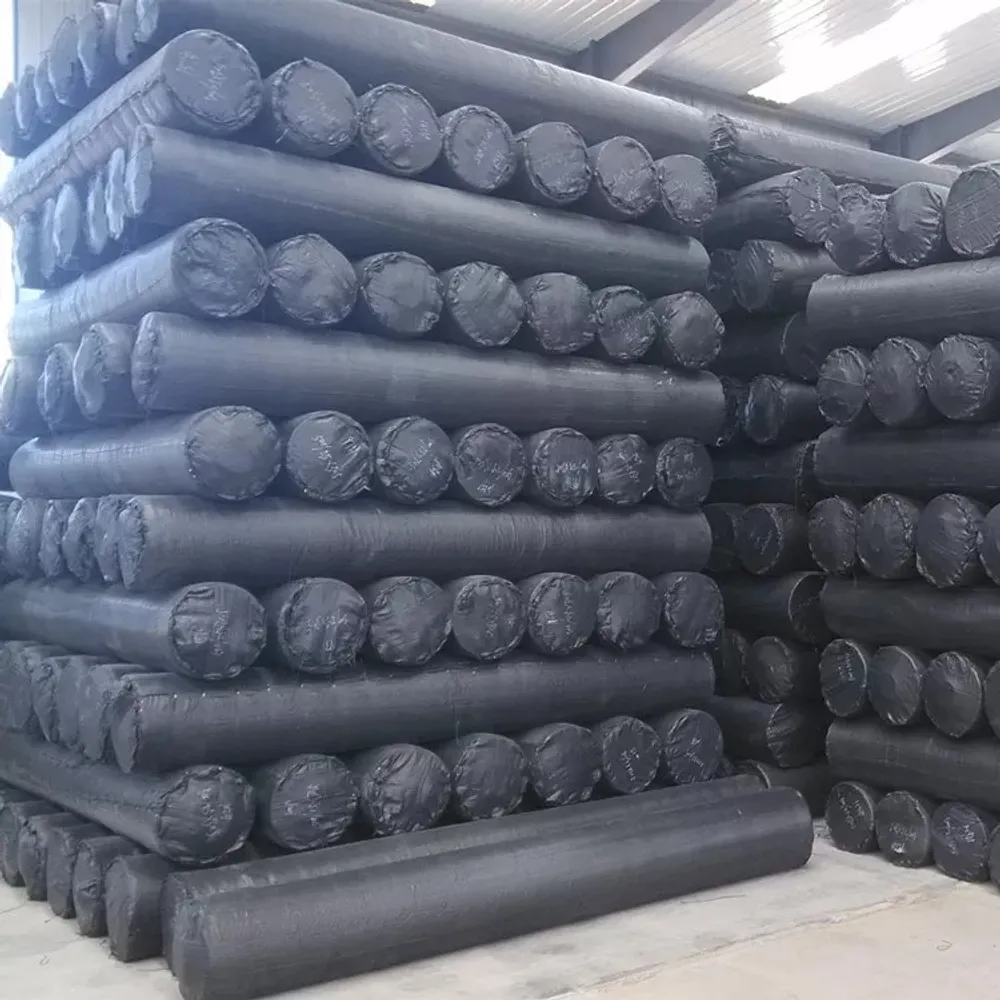
PET Needle-Punched Nonwoven Geotextile (polyester) — AASHTO M288 minimum average roll values (MARV), elongation ≥50%.
| Property | Test Method | Unit | Class 1 | Class 2 (default) | Class 3 |
|---|---|---|---|---|---|
| Grab strength (min.) | ASTM D4632 | N | 900 | 700 | 500 |
| Sewn seam strength (min.) | ASTM D4632 | N | 810 | 630 | 450 |
| Trapezoid tear strength (min.) | ASTM D4533 | N | 350 | 250 | 180 |
| CBR puncture strength (min.) | ASTM D6241 | N | 1925 | 1375 | 990 |
Our PET needle-punched nonwoven geotextile is manufactured to AASHTO M288, the standard specification for geosynthetics. AASHTO M288 grades the fabric by installation survivability — Class 1 (most severe), Class 2 (default) and Class 3 — with minimum average roll values for grab, sewn seam, trapezoid tear and CBR puncture strength, plus permittivity and AOS set by the soil gradation for filtration.
Both are needle-punched nonwoven fabrics under AASHTO M288. A polyester (PET) needle punched geotextile has higher creep resistance and excellent chemical and thermal stability; a polypropylene (PP) grade is lighter and usually lower cost. For demanding reinforcement and long-term load, PET is often preferred; for general filtration and separation either works.
Yes — a pet nonwoven geotextile is a good filter fabric for a French drain. Its high permittivity lets water pass into the drain while the fabric filters out soil fines and prevents clogging. The required permittivity and apparent opening size are selected from the surrounding soil gradation per AASHTO M288.
Class 2 is the default; step up to Class 1 for severe placement over coarse, angular stone or soft subgrade, and down to Class 3 for mild conditions. AASHTO M288 governs by survivability class rather than by mass per unit area. Tell us the soil, function and site severity and we will recommend a grade.
Polyester (PET) needle-punched geotextile has high temperature resistance up to about 230 °C while maintaining its structure and original physical properties, plus high resistance to ultraviolet radiation so it is not easily degraded. It also resists corrosion from soil chemicals, gasoline and diesel and is rot- and mildew-resistant, which makes it well suited to warmer or chemically active ground.
As the manufacturer we run economic batches, so the minimum order quantity depends on the weight and width rather than a fixed roll count; standard grades carry a low MOQ while custom widths are made to order. Send us the class or gsm, roll width and total area and we will confirm the MOQ, stock availability and production lead time with the quote.
Roll width and length are order-specific and are not governed by AASHTO M288. We hold common stock widths and can produce custom widths and lengths to suit the site and shipping container. Contact us with your required dimensions and we will confirm stock sizes and any made-to-order options.
PET needle-punched geotextile price depends mainly on the weight (gsm) / survivability class, roll width and order volume. As a manufacturer we quote ex-works per square metre or per roll; send us the class or gsm, total area and destination port and we will return a price the same business day.
Tell us quantity, destination port, and any questions — we reply within one business day.
Geotextile High-strength woven geotextile fabric (PP / PET high-tenacity yarn) to AASHTO M288 — for separation, stabilization and reinforcement on roads.
 Geotextile
 Needle-punched nonwoven geotextile fabric (PET / PP staple fiber) to AASHTO M288 — for filtration, separation, drainage and protection in French drains.
 Geotextile
 Polypropylene (PP) geotextile to AASHTO M288 — needle-punched PP nonwoven for filtration, separation, drainage and protection, plus woven PP grades.