
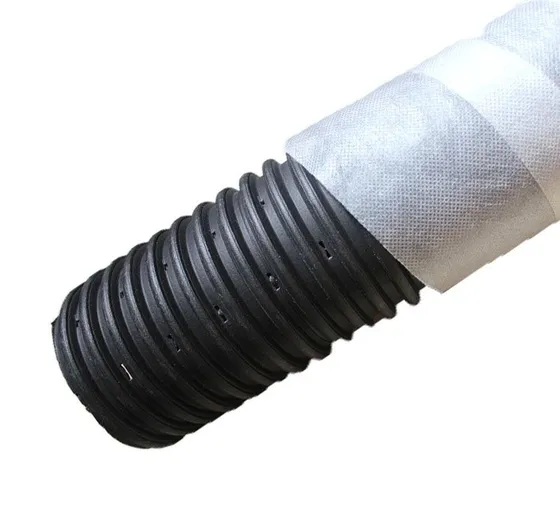
 Drainage
 Corrugated Drainage Pipe
HDPE double-wall corrugated drainage pipe (Type S) to AASHTO M294 — corrugated outside, smooth inside, solid or perforated, 4"–60" for culverts.
- AASHTO M294
- Type S dual-wall
- 4"–60" · solid / perforated
SIGMA dimpled drainage sheet is a high-density polyethylene membrane formed with cylindrical or semi-cone dimples on the surface. The dimples create a continuous air gap so water and gas move freely between the studs, making it both a drainage layer and a protection layer. As a dimple board it is widely used for foundation waterproofing, basement walls, roof gardens, planters and slope protection, and it can be faced with a nonwoven geotextile filter to keep soil fines out of the drainage channels.
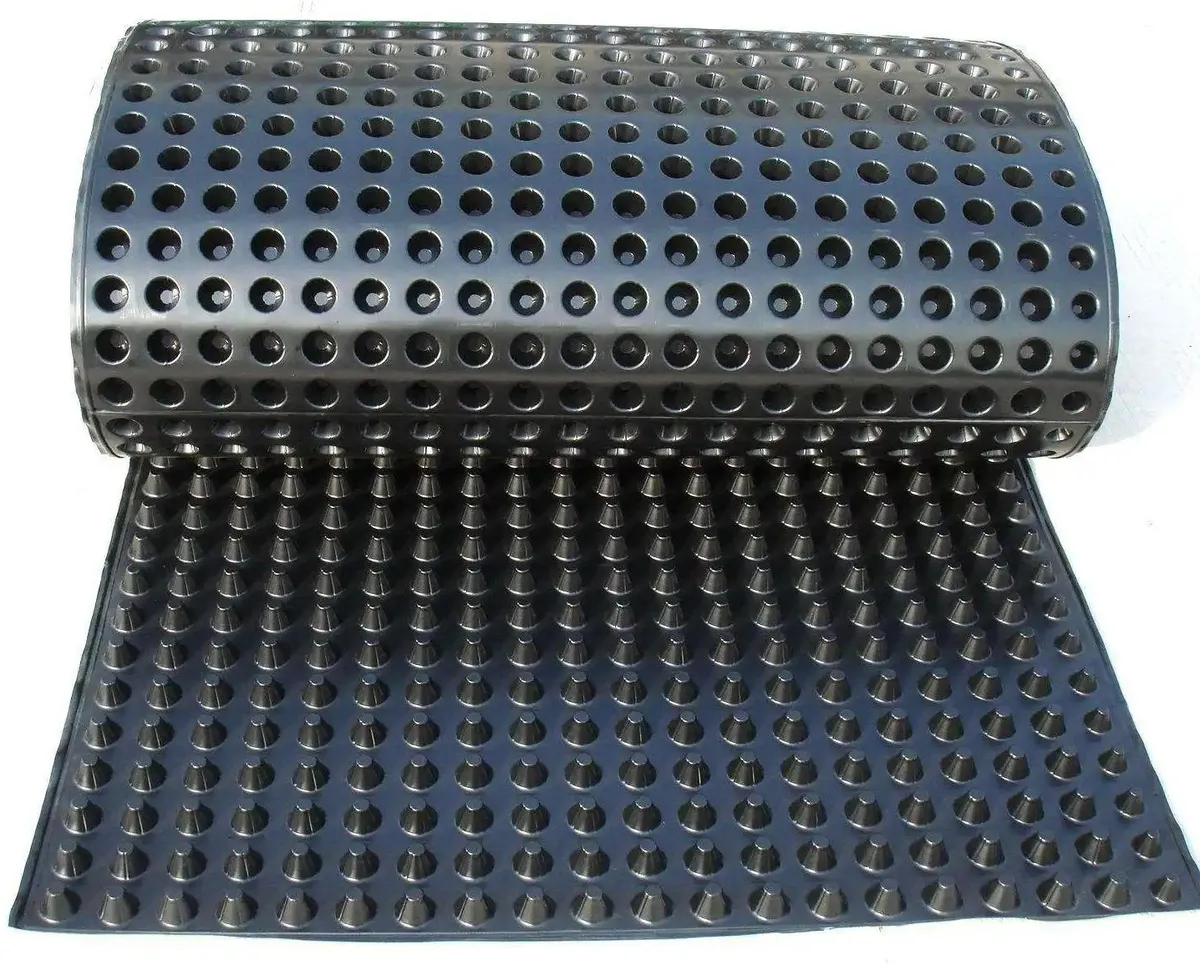
A dimpled drainage sheet — also called a dimple board, dimpled sheet or dimpled membrane — is an HDPE sheet pressed with cylindrical or semi-cone dimples. The studs hold a continuous air gap against the structure, so water collected behind a foundation wall drains down to a footing drain instead of building hydrostatic pressure, while the sheet protects the waterproofing membrane behind it. Liquid and gas pass freely between the dimples, which is why a dimple board for wall drainage is the standard detail on basement and foundation walls.
The board is made from high-density polyethylene, the same impermeable resin used in geomembranes, so it combines a drainage function with a waterproofing function in one sheet. The HDPE is extruded into a flat film and then vacuum- or press-formed so that rows of cylindrical or semi-cone dimples are raised across the surface; the depth of those dimples sets the size of the drainage gap. Because the polymer is HDPE, the finished dimpled membrane is anti-aging, corrosion-resistant and root-resistant, giving it a long service life buried against soil or concrete.
As a foundation dimple mat the sheet is fixed dimples-toward-the-wall, creating a drainage cavity that carries seepage to the perimeter drain; this is the dimpled membrane for basement walls detail used for both new build and remedial damp-proofing. The same dimple board waterproofing membrane works on roof gardens, planters and green roofs, where it stores a little water at the dimple base while draining the excess. A nonwoven geotextile facing can be bonded on so the dimple drainage mat filters soil fines and will not clog.
The sheet is light and flexible, so a single worker can roll it out and fix it fast to a wall or deck — there is no heavy equipment to bring on site. On a basement or foundation wall drainage mat install the dimples toward the structure and lap the edges so the drainage cavity stays continuous; at the base, the cavity should discharge into a footing or perimeter drain. For a geotextile-faced board, keep the filter fabric facing the soil so fines are screened out before water reaches the dimples. On green roofs and planters the board is laid dimples-down over the waterproofing as a combined drainage and protection layer.
Plain or geotextile-faced, the board serves foundation waterproofing, basement and inside-and-outside basement walls, garage-roof and roof-garden greening, vertical greening, football pitches and golf courses, plus municipal works such as airports, road embankments, subways, tunnels and landfills. In water-conservancy and traffic projects it acts as a seepage-control and slope-protection layer for reservoirs, dams, roadbeds, railways and highways. Across all of these the dimple drain board does the same job: it relieves water pressure and protects the layer behind it.
The sheet is supplied plain or geotextile-faced, in a range of dimple heights and compressive grades for foundation waterproofing, basement walls, tunnels, landfill seepage protection and roadbed or slope protection layers. Because there is no single public standard for dimple boards, SIGMA dimple height, thickness, compressive load and discharge capacity are confirmed against production data — never guessed. For a punched 3D drainage core with a similar function see our geonet; where a stiffer pipe is needed to carry the collected water see our rigid permeable drain pipe; and to gather the drained water at the base of the wall pair it with our corrugated drainage pipe. Browse the full drainage range for related products.
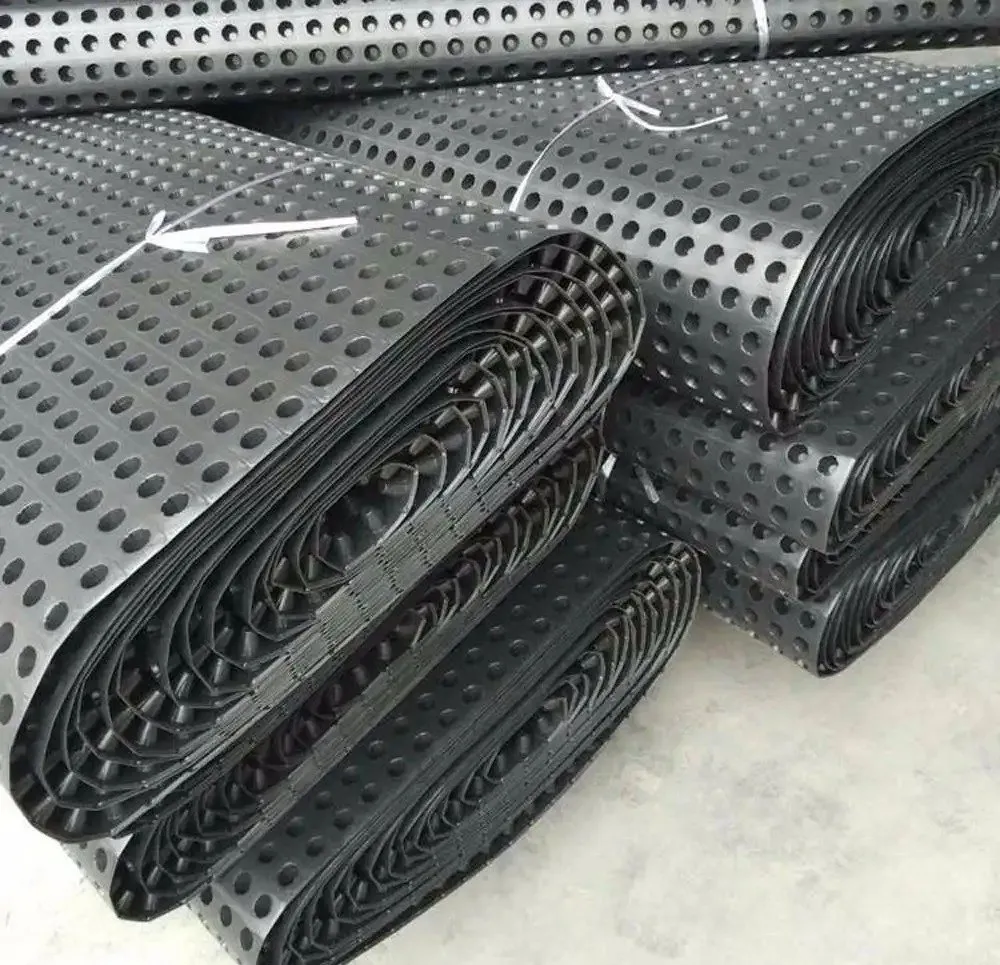
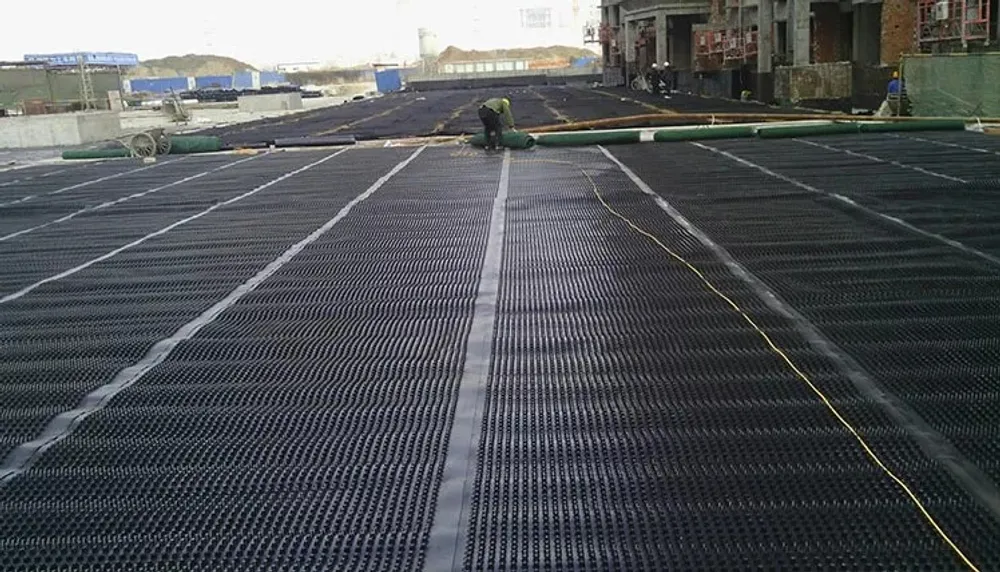
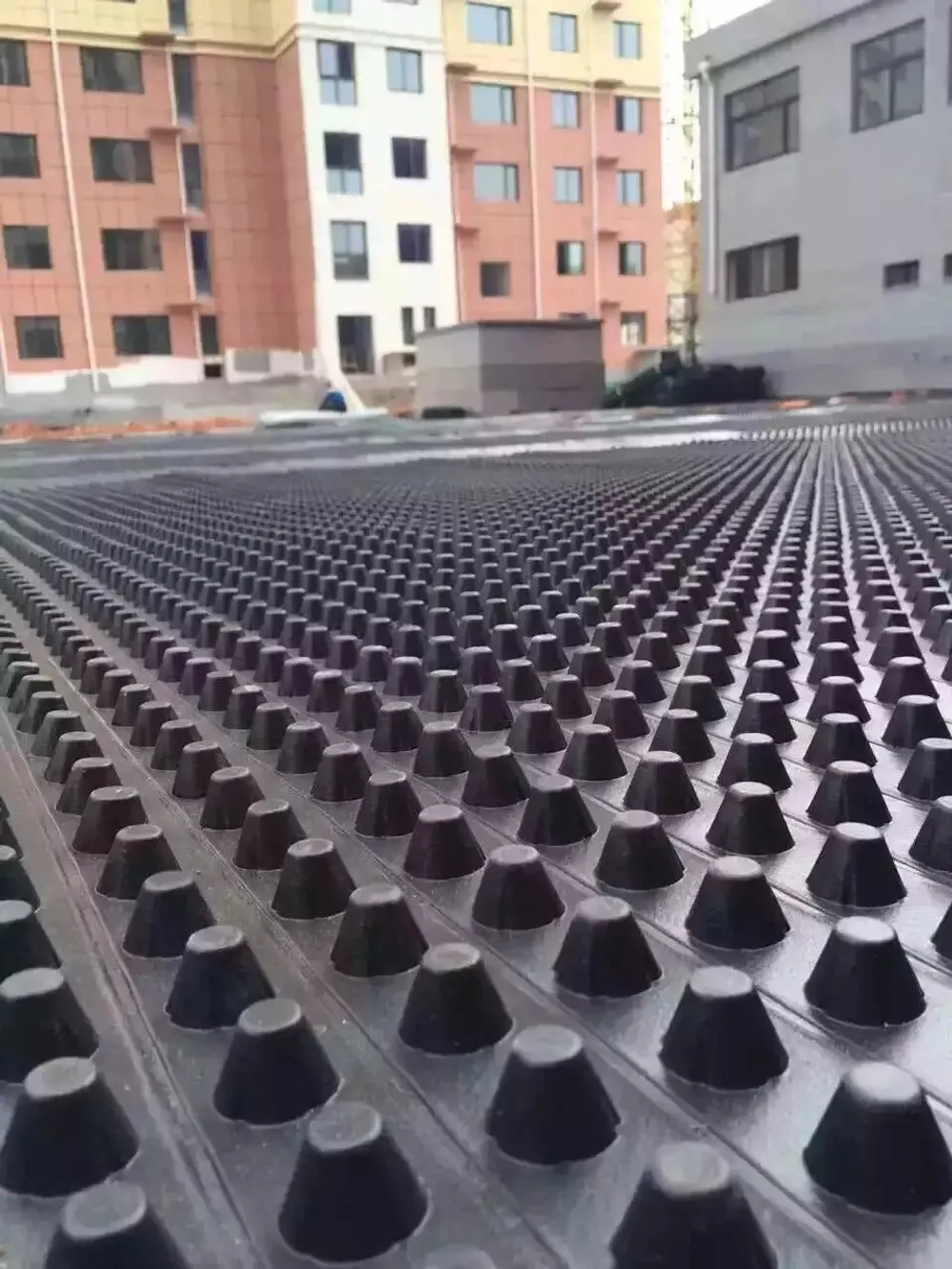
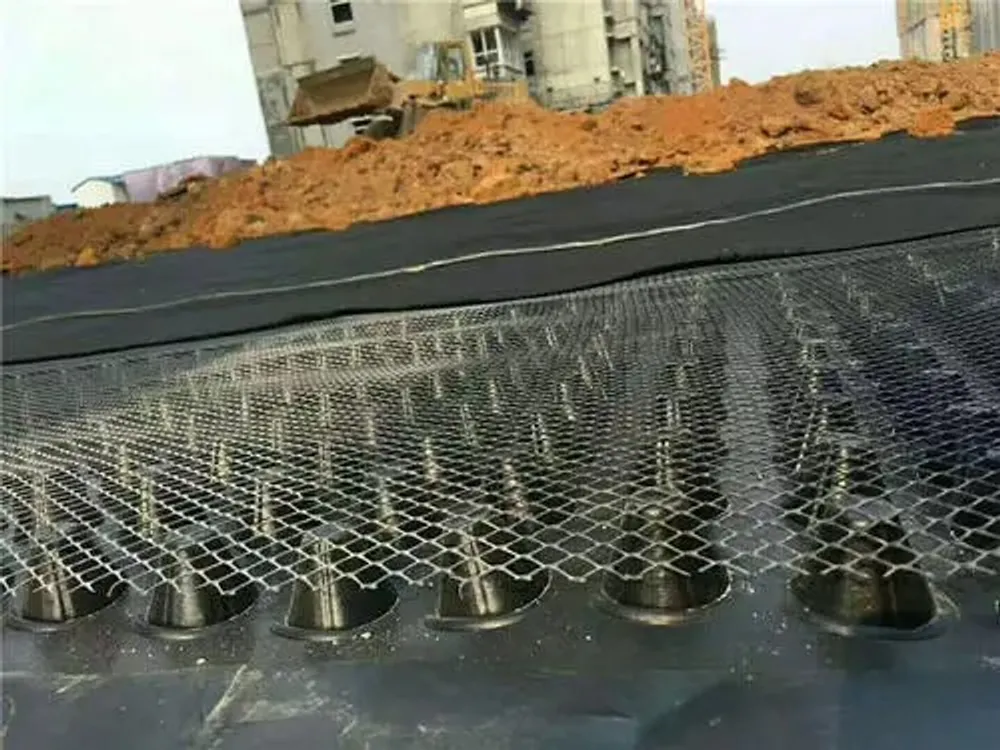
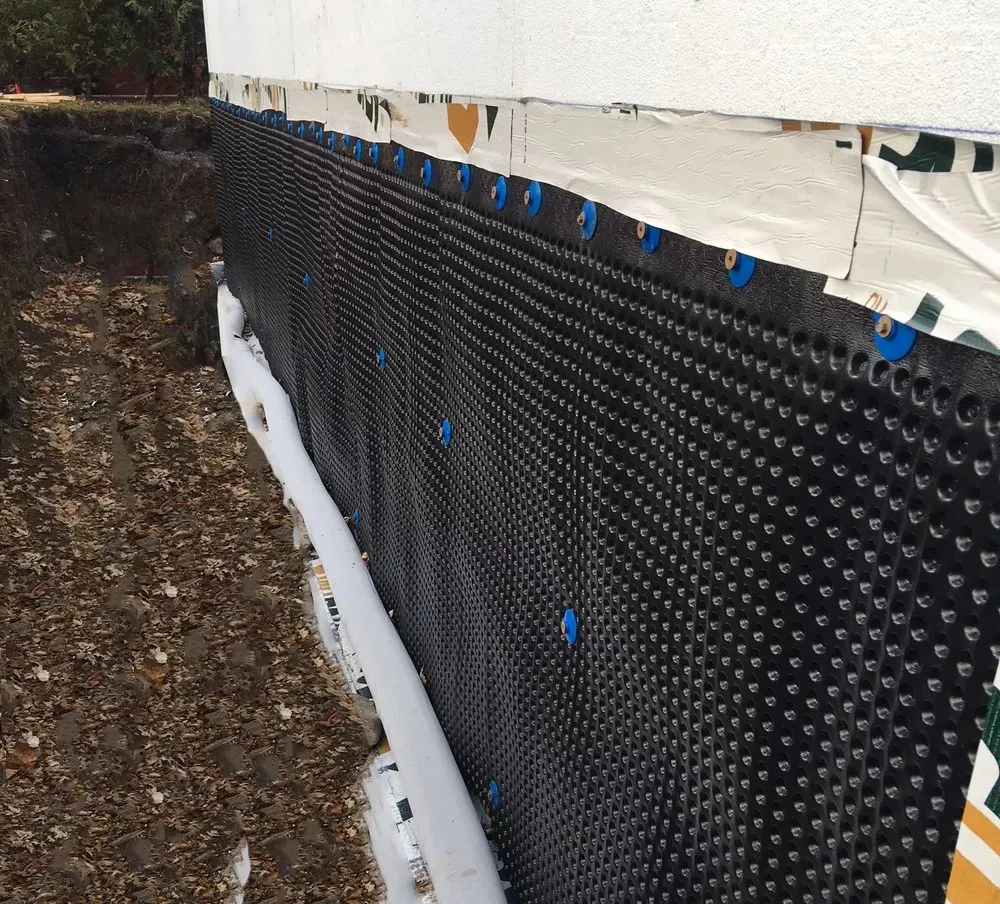
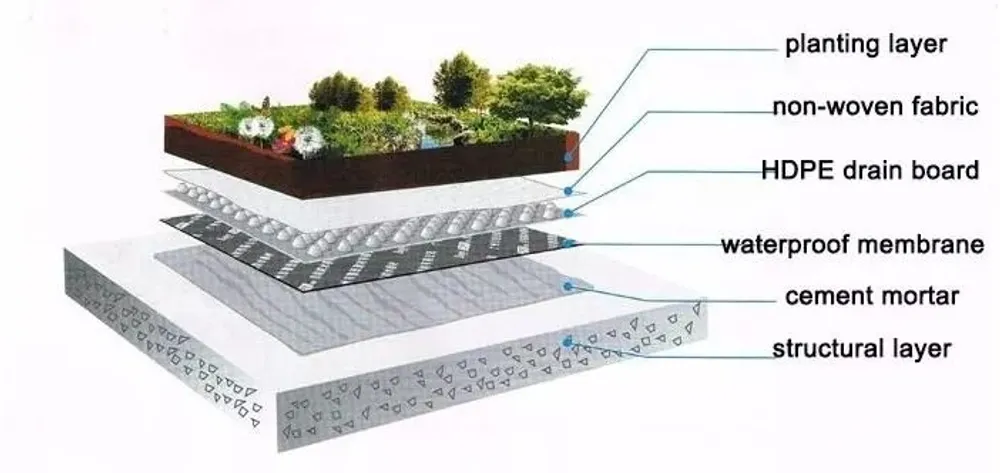
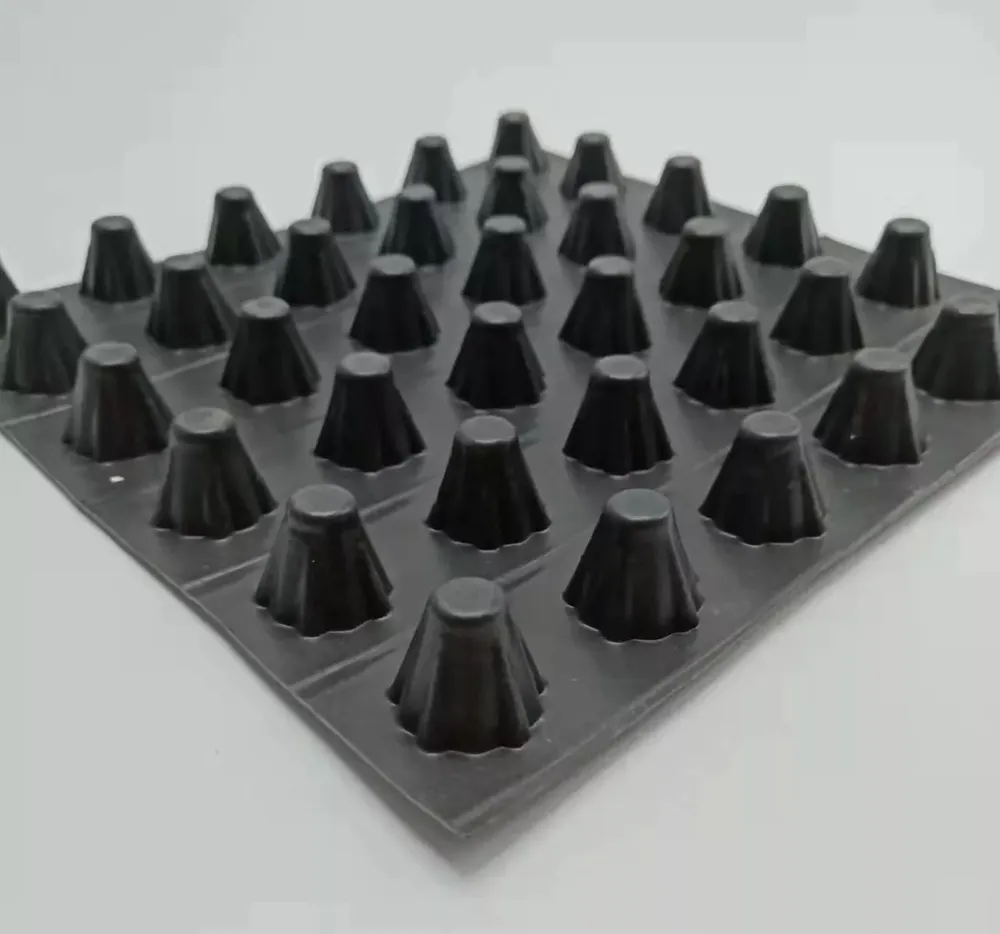
Dimpled drainage sheet (HDPE dimple board) — manufacturer specification. No single public statutory standard governs dimpled drainage sheets; numeric values to be supplied from SIGMA production data.
| Property | Value | Notes |
|---|---|---|
| Material | High-density polyethylene (HDPE) | — |
| Dimple shape | Cylindrical or semi-cone studs | — |
| Facing | Optional nonwoven geotextile filter | g/m² if faced |
| Color | Black; other colors on request | — |
| Dimple height | 8 / 10 / 15 / 20 mm; deeper profiles on request | sets the drainage gap depth |
| Sheet thickness | On request | — |
| Mass per unit area | On request | g/m² or kg/m² |
| Compressive load (at stated deflection) | ≈150 – 400 kPa, grade-dependent | test method & deflection quoted per grade |
| Discharge / drainage capacity | On request | quote at design head/gradient |
| Roll size (width × length) | On request | supplied in rolls |
A dimpled drainage sheet (dimple board) is used for foundation waterproofing and basement wall drainage, roof gardens and planters, retaining-wall and tunnel back drainage, and as a protection or slope-protection layer. The dimples hold an air gap so water drains away to a footing drain instead of building hydrostatic pressure against the structure.
For a foundation dimple mat the dimples normally face toward the wall, creating a continuous drainage cavity between the dimple board and the waterproofing. Collected water runs down this cavity to the perimeter drain. Tell us the wall height and detail and we will recommend the dimple height and fixing.
Yes. A nonwoven geotextile filter can be bonded to the dimpled side so the dimple drainage mat filters soil fines while water passes through — this keeps the drainage channels from clogging when the sheet is buried against soil, as on green roofs, planters and back-of-wall drainage.
Dimple height sets the drainage gap and the compressive grade sets how much load the sheet carries (e.g. trafficked roof deck vs basement wall). Because there is no single public standard for dimple boards, we confirm dimple height, thickness, compressive load and discharge capacity from SIGMA datasheet for your application — send us the use and design load.
Price depends on the dimple height, the sheet thickness and grade, whether a nonwoven geotextile facing is bonded on, the roll size and the order quantity. Because the board is built to your specification rather than to a single public standard, send us the application, the dimple height (or the design load) and the area, and we will quote a unit price per square metre or per roll.
The dimple board is made to order in HDPE, so a minimum order quantity applies and varies with the dimple height, grade and whether a geotextile facing is added. Tell us the area you need to cover and we will confirm the MOQ together with the lead time for your specification.
Lead time depends on the dimple height and grade, whether a geotextile facing is laminated on, and the order size. After we confirm the dimple height, thickness, facing and roll size against SIGMA production data, we will give you a firm production and shipping schedule.
The board is lightweight and supplied in rolls, so it ships compactly. We confirm the roll width and length from SIGMA production data, then advise how many rolls fit a pallet or a container for your order so you can plan freight — send us the destination port and quantity.
Tell us quantity, destination port, and any questions — we reply within one business day.
Drainage HDPE double-wall corrugated drainage pipe (Type S) to AASHTO M294 — corrugated outside, smooth inside, solid or perforated, 4"–60" for culverts.
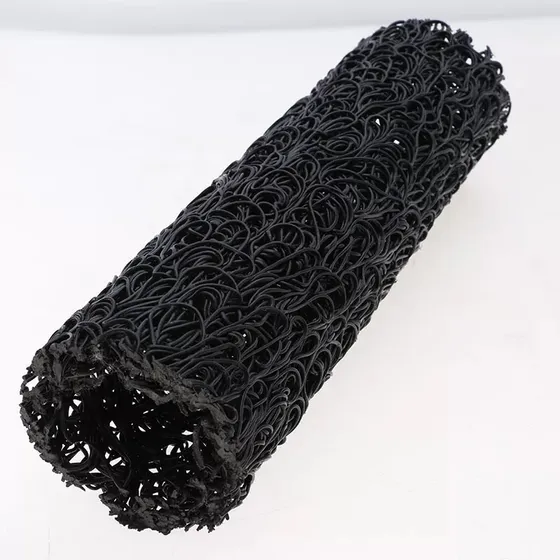 Drainage
 Rigid permeable drain pipe (plastic blind ditch) — a PE filament-wound permeable core, optionally geotextile-wrapped, for rapid groundwater intake.
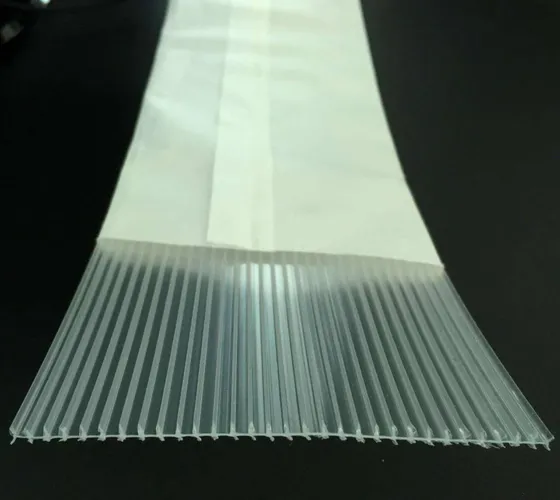 Drainage
 Prefabricated vertical drain (PVD / wick drain) — a PP drainage core in a nonwoven PP geotextile filter that accelerates consolidation of soft soils.